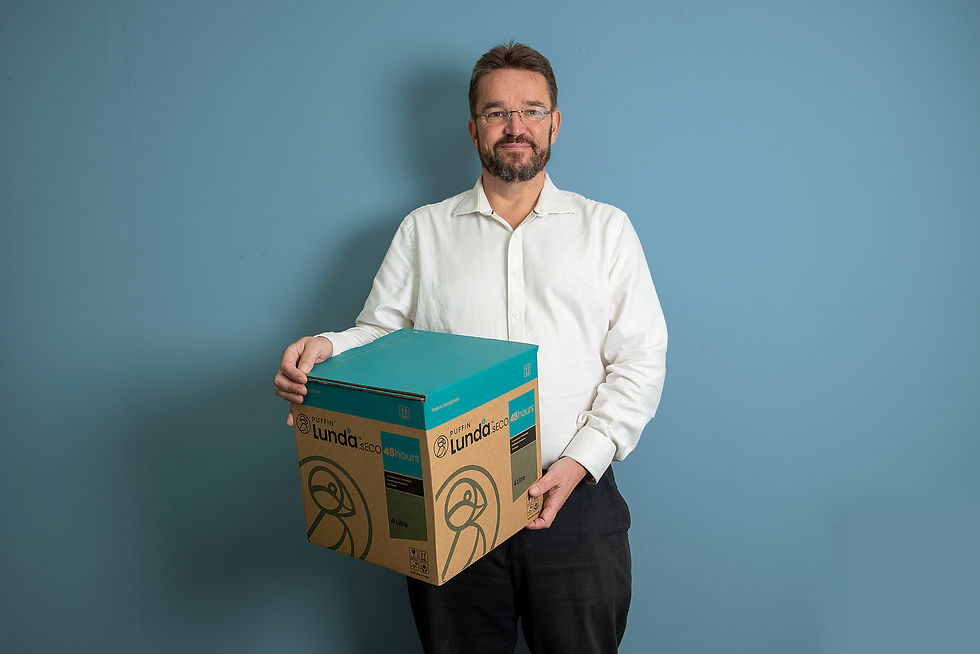
Strengthening the TempChain Process for UK Productivity: A Successful Presentation at the UK GDP Association. UK domestic temperature profile.


We were delighted to present our latest collaborative project with the UK GDP Association at this year's event, where the response from attendees was overwhelmingly positive. Presented by Nick Geary and Danielius Arceris, the session focused on a topic that continues to be critical for the pharmaceutical and healthcare logistics sector: developing a realistic UK domestic temperature profile to strengthen GDP-compliant packaging qualification and transport validation.
The presentation, titled Strengthening the TempChain Process for UK Productivity, showcased the significant progress made through the ongoing partnership between Lunda TempChain and the UK GDP Association. The project represents one of the most comprehensive efforts to understand real-world temperature conditions experienced during UK domestic transport.
Why This Project Matters
For many years, packaging qualification and temperature-controlled transport validation have relied on a mixture of international standards, historic assumptions, and limited local data. While these approaches provide a foundation, the industry has recognised the need for a more representative UK-specific temperature profile.
To address this challenge, Lunda TempChain launched a year-long monitoring exercise in collaboration with the UK GDP Association. Since June 2025, weekly shipments have been dispatched from our headquarters in Morley, Leeds, to a destination in the Cotswolds. Each shipment has been equipped with temperature monitoring technology, allowing us to capture real-world environmental conditions throughout the journey.
The objective has been simple but highly valuable: establish an evidence-based domestic temperature profile that reflects the actual conditions experienced during UK transport throughout the year.
A Year's Worth of Real-World Data - UK domestic temperature profile
One of the key highlights shared during the presentation was the scale and consistency of the data collection programme.
Over the past twelve months, we have successfully monitored temperature conditions every week, capturing:
Peak summer temperatures
Winter cold-chain conditions
Mid-season transitional periods
Daily temperature fluctuations
Extreme temperature events
Average seasonal transport profiles
This continuous monitoring has enabled us to identify both the hottest and coldest transport periods of the year while developing representative seasonal temperature profiles that can be used for future packaging qualification studies.
Rather than relying on theoretical scenarios, businesses will now be able to reference real UK transport data when assessing packaging performance and temperature-sensitive supply chains.
Key Findings
Several important insights emerged from the project:
Clear Seasonal Temperature Profiles Exist : The data demonstrated distinct temperature behaviours across summer, winter, and mid-season periods. Each season exhibited its own transport temperature characteristics, providing a strong basis for creating standardised qualification profiles.
Real-World Conditions Differ from Assumptions : The monitoring programme highlighted how actual transport temperatures can vary from commonly used qualification assumptions. This reinforces the importance of basing validation activities on real-world evidence wherever possible.
Extreme Events Must Be Considered : By identifying the hottest and coldest trips recorded during the monitoring period, the project has helped define realistic worst-case scenarios that can be incorporated into future packaging and transport qualification protocols.
Industry Standardisation Is Achievable : Perhaps most importantly, the project demonstrates that the UK industry can move towards a more consistent and evidence-based approach to packaging qualification. Standardised temperature profiles will help reduce uncertainty, improve compliance, and create greater confidence across supply chains.
Supporting GDP Compliance
Good Distribution Practice (GDP) requires organisations to demonstrate that medicinal products remain within acceptable conditions throughout storage and transport.
One of the ongoing challenges for many organisations is selecting appropriate test profiles for packaging validation and transport qualification studies. Without representative domestic data, qualification exercises may either underestimate or overestimate the conditions products experience in transit.
The temperature profiles generated through this project provide a practical solution by offering data-driven testing conditions specifically relevant to UK distribution networks.
This supports better decision-making, improved risk management, and ultimately stronger product protection for patients.
A Fantastic Response from Attendees
We were encouraged by the level of engagement during the presentation. The questions and discussions that followed demonstrated a clear industry appetite for practical, evidence-based approaches to temperature-controlled logistics.
Attendees recognised the value of developing a shared understanding of domestic transport conditions and the potential benefits this could bring to qualification studies, compliance activities, and operational efficiency.
The positive feedback received reinforced the importance of collaboration between industry stakeholders, logistics providers, and compliance professionals.

Request your free copy
As part of our commitment to supporting the industry, the completed UK temperature profile and associated findings will be made available free of charge.
If you would like to receive a copy of the final report, learn more about the project, or discuss how these findings could support your qualification and compliance activities, please contact Lunda@PuffinPackaging.co.uk
Request your free copy
What's Next?
The monitoring exercise is now approaching completion, and the final UK domestic temperature profile is being prepared.
Once finalised, the resulting temperature maps and qualification profiles will provide an important resource for organisations involved in pharmaceutical distribution, temperature-sensitive logistics, and GDP compliance.
Our goal is to help the industry establish a more robust and standardised approach to transport qualification based on real UK operational data.
We would like to thank the UK GDP Association and all attendees for their interest, engagement, and support. We look forward to sharing the final results and continuing to strengthen confidence in temperature-controlled supply chains across the UK.
Trust in TempChain. Trust in Lunda.
Scientifically Tested TempChain Solutions for Temperature-sensitive Pharma, Diagnostics and Biotech.
We offer scientifically tested temperature-controlled packaging that meets pharmaceutical cold chain standards, specifically designed for biotech, clinical trials, and pharmaceutical logistics.